 Comparison
Modern African vs South American Cinema: Key Differences
Quick Summary
Modern African cinema and South American cinema are both vital film movements outside Hollywood, but they differ in critical framing and emphasis. African cinema is often measured against Third Cinema and linear temporality, while South American cinema develops through separate national centers such as Argentina, Brazil and Mexico. Both return to colonial history and identity through different narrative mechanisms.
- African cinema is often measured against Third Cinema and its emphasis on linear temporality.
- South American cinema develops through separate national centers, with Argentina, Brazil and Mexico named as main production centers.
- Recent Latin American films bring Black Latin American histories into focus from a fresh angle.
- African films often treat Black identity as the national majority experience rather than a minority counter-narrative.
- Comparing box office totals across the two regions can be misleading because the markets measure different things.
Table of Contents
- Modern African Cinema vs South American Cinema: An Overview
- Histories and Development: How Each Cinema Got Here
- Themes Compared: Colonialism, Identity and Race
- African and Latin American Cinema Comparison: Urban Space and Modernism
- African Cinema Directors and South American Film Directors Shaping Film Today
- Industry Reach, Distribution and Audience Access
- Where to Start Watching: Films from Both Regions on BINGE
- Frequently Asked Questions
Modern African Cinema vs South American Cinema: An Overview
Last Updated: November 17, 2026
Modern African cinema and South American cinema are two of the most vital film movements working outside the Hollywood system today. This guide compares them on history, themes, urban life, filmmakers and how audiences can actually find their work.
Both regions have produced films that challenge inherited assumptions about storytelling. A research project examining twelve African and Latin American films from different eras and countries focuses on how these works treat urban space, genre and subjectivity Urban Space, Genre and Subjectivity in African and Latin American Cinema. That shared focus is a useful starting point, but the two cinemas differ in important ways.
The first difference is the label itself. "Latin America" covers a wide region, yet national film industries within it vary a great deal. Argentina, Brazil and Mexico are commonly identified as the main production centers Cinema of Latin America overview. Treating the region as one uniform counterpart to African cinema obscures those differences.
Histories and Development: How Each Cinema Got Here
Modern African cinema has long been measured against what scholars call Third Cinema, with its emphasis on linear temporality. Recent work argues that contemporary African film challenges those assumptions Third Cinema Under Pressure: African Film Aesthetics. The result is a cinema less bound to a single political narrative.
South American cinema developed through its own national centers, each with distinct production histories. Treating these histories as separate threads makes the comparison more accurate than a single regional story would.
The two cinemas have developed along different lines, and the article's key points can be compared side by side:
| Aspect | African cinema | South American cinema |
|---|---|---|
| Critical frame | Measured against Third Cinema and linear temporality | Developed through separate national centers |
| Core challenge | Recent work challenges Third Cinema assumptions | Each national history treated as its own thread |
| Key production centers | Not named in the article | Argentina, Brazil and Mexico |
Themes Compared: Colonialism, Identity and Race
Both modern African and South American cinemas return repeatedly to colonial history, cultural identity and the representation of Black and Indigenous lives, but they tend to approach those themes through different narrative mechanisms. Naming the mechanism matters more than naming the theme, because it is what separates a useful comparison from a list of shared keywords.
African cinema often works through what scholars describe as a postcolonial reckoning with the colonial archive: the film revisits a documented past and asks who has the right to narrate it. South American cinema more often works through what critics call the unresolved present, the colonial past is treated as a structure still operating in land ownership, labor and racial hierarchy. The result is that an African film about colonialism frequently feels like a historical argument, while a South American film about the same subject frequently feels like a contemporary social diagnosis.
Race is where the two traditions diverge most sharply in emphasis. Recent Latin American films have brought Black Latin American histories, struggles and lives into focus from a fresh angle Afro-Cinema in Latin America essay, often foregrounding Afro-descendant communities in Brazil, Colombia and Venezuela whose stories were marginalized within national cinemas that otherwise celebrated mestizaje. African films, by contrast, tend to treat Black identity as the national majority experience rather than a minority counter-narrative, which changes the dramatic stakes: the question is less "will this community be seen?" and more "what kind of nation is being built?"
A second contrast is the role of Indigenous representation. South American cinema has a longer, more contested tradition of Indigenous-language and Indigenous-directed work, particularly in Bolivia, Peru and Ecuador, where films are sometimes made in Quechua or Aymara. African cinema's linguistic diversity is just as real, Wolof, Bambara, Lingala, Amharic and others, but the political framing is usually post-independence nation-building rather than the hemispheric Indigenous-rights framing common in South America.
Watch out: treating either region as thematically unified will flatten the differences between, say, a Nollywood genre film and a Senegalese auteur drama, or between a Brazilian favela film and an Argentine middle-class chamber piece. The shared themes are real, but they are carried by very different industrial and narrative traditions.
African films also face a particular reception problem that shapes which themes reach international audiences. Critics note that they seldom move beyond an "exotically interesting" status and reach only a limited public African Cinema: challenges and possible ways forward. Latin American films can face a similar risk of being read as regional curiosities, but the festival circuit has historically been more receptive to Spanish- and Portuguese-language art cinema, which gives South American directors a slightly wider thematic runway before their work is reduced to a national stereotype.
African and Latin American Cinema Comparison: Urban Space and Modernism
Urban life is central to how both cinemas frame the individual and the community. Films set in crowded cities tend to explore how people move through, and are shaped by, the spaces around them.
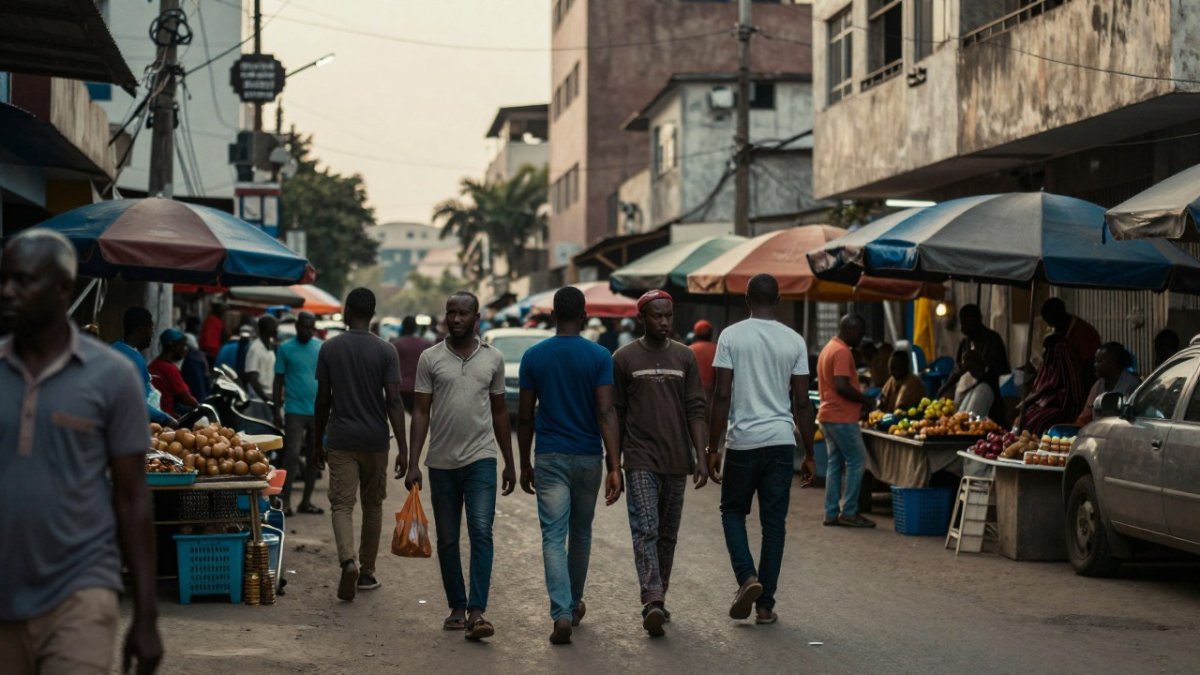
Modernism shows up differently in each region. African filmmakers often push against linear narrative expectations, while South American directors draw on their own national film histories. Both approaches reward viewers willing to slow down and read the form closely.
African Cinema Directors and South American Film Directors Shaping Film Today
Filmmakers from both regions are gaining international attention. African filmmaking talent is thriving on the global stage even as the market faces business challenges African Filmmaking Talent Thrives as Market Stumbles.
If you want to go deeper into how these directors frame their images, our guide on how to analyze cinematography in indie films is a practical starting point. For a broader look at modern directors to know now, see our piece on modern surrealist directors you should know.
South American Film Directors to Watch
South American cinema offers a strong starting point for viewers new to the region.
Industry Reach, Distribution and Audience Access
This is the section most comparisons skip, and it is where the two regions differ most concretely. Instead of treating "distribution" as a single problem, it helps to separate the industrial model, the festival pathway and the platform pathway, because African and South American cinemas are strong at different stages.
Watch out: comparing box office totals across the two regions can be misleading, because the markets measure different things. Compare like with like before drawing conclusions about which cinema "travels" better.
Where to Start Watching: Films from Both Regions on BINGE
The easiest way to compare the two cinemas is to watch them side by side. If you are new to subtitled films, our guide on how to watch world cinema with subtitles effectively explains how to get the most from them. Our list of the 7 best world cinema films for beginners is another good place to begin.
BINGE Movies & TV curates independent films, with new titles added daily. You can browse the award-winning international cinema collection, and start your 7 day FREE trial to explore it at no cost.
Ready to start comparing? Stream bold, independent films from both regions with BINGE Movies & TV, and download titles for offline viewing on your phone, tablet or Smart TV. Start your 7 day FREE trial today.
Frequently Asked Questions
What are the main differences between modern African and South American cinema?
Modern African cinema is shaped by the continent's many national and linguistic traditions and by a struggle for distribution and visibility beyond festival circuits. South American cinema, centered on production hubs such as Argentina, Brazil and Mexico, has a longer institutional history and a more established industry base. Both regions use genre and urban space to explore identity, but African filmmakers often challenge linear storytelling inherited from Third Cinema, while South American films frequently engage with dictatorship, social struggle and regional geography. Comparing them works best country by country rather than as two uniform blocs.
What themes are common in contemporary African and South American cinema?
Recurring themes in both regions include colonial history, postcolonial identity, race and representation, and life in rapidly changing cities. Recent Latin American films have brought Black Latin American histories and lives into focus, while African filmmakers increasingly question the assumptions of earlier political cinema. Social struggle and individual subjectivity run through both traditions, though each region approaches them through its own national history and film periods.
Which African and South American directors are shaping cinema today?
Contemporary African filmmaking talent is gaining global visibility even as the market faces business challenges, . In South America, Argentina, Brazil and Mexico remain the main production centers, and the region's festival presence continues to grow. Because specific rankings of directors vary by source and the research available here does not establish a definitive list, the best approach is to explore directors through festival programs and curated platforms, where emerging and established filmmakers from both regions appear side by side.
Why are African films harder to find than South American films for many viewers?
African films often reach audiences only through festivals or specialty distributors, and their reach is often limited to niche audiences. South American films benefit from larger national industries and more established export routes, though many still struggle with limited release. Curated streaming platforms that add titles regularly can make both regions easier to access without relying on a single festival window.