 how-to
How to Analyze Cinematography in Indie Films
Quick Summary
To analyze cinematography in indie films, examine shot composition, camera movement, lighting, color, and mise-en-scène, then break key scenes down shot by shot. Keep notes in a table, and check how grading, editing, and budget limits shaped each visual choice.
- Start with shot scale and framing, such as close-ups for emotion and wide shots for isolation.
- Track camera movement and point of view to see whether the audience shares a character's perspective.
- Read lighting and color as signals: low-key lighting often suggests tension or secrecy.
- Break one scene down into a shot-by-shot table covering scale, camera, lighting, cut rhythm, and purpose.
- Check whether grading and editing, not just the camera, produced the look you are analyzing.
Table of Contents
- Why Indie Cinematography Rewards Close Analysis
- Step 1: Watch for Shot Composition and Framing
- Step 2: Track Camera Movement and Point of View
- Step 3: Read Lighting, Color, and Mise-en-Scène
- Step 4: Break Down a Single Scene Frame by Frame
- Working With Budget Limits and Natural Light
- Turning Your Observations Into a Film Analysis Essay
- Where to Find a Film Analysis Example and Template
- Frequently Asked Questions
Why Indie Cinematography Rewards Close Analysis
Last Updated: November 4, 2026
Learning how to analyze cinematography in indie films takes patience, but the payoff is huge.
Indie films often work with tight schedules, small crews, and natural light. That pressure forces filmmakers to make deliberate choices. Every framing decision, camera move, and color choice tends to matter.
Film analysis is the process of looking at how a film's visual elements work together to create meaning. Cinematography is one of its core parts.
Here is what you will learn in this guide:
- How to read shot composition and framing
- How to track camera movement and point of view
- How to read lighting, color, and mise-en-scène
- How to break a scene down frame by frame
- How to write a clear film analysis essay
A 2026 paper on empirical film analysis notes that statistical style studies measure shot length, camera movement, and shot scale arXiv methodology paper on empirical film analysis. Those same measurements make a useful starting point for anyone studying an indie film by hand.
Step 1: Watch for Shot Composition and Framing
Start with the frame itself. Ask where the subject sits, how much of the screen they fill, and what the empty space around them suggests.
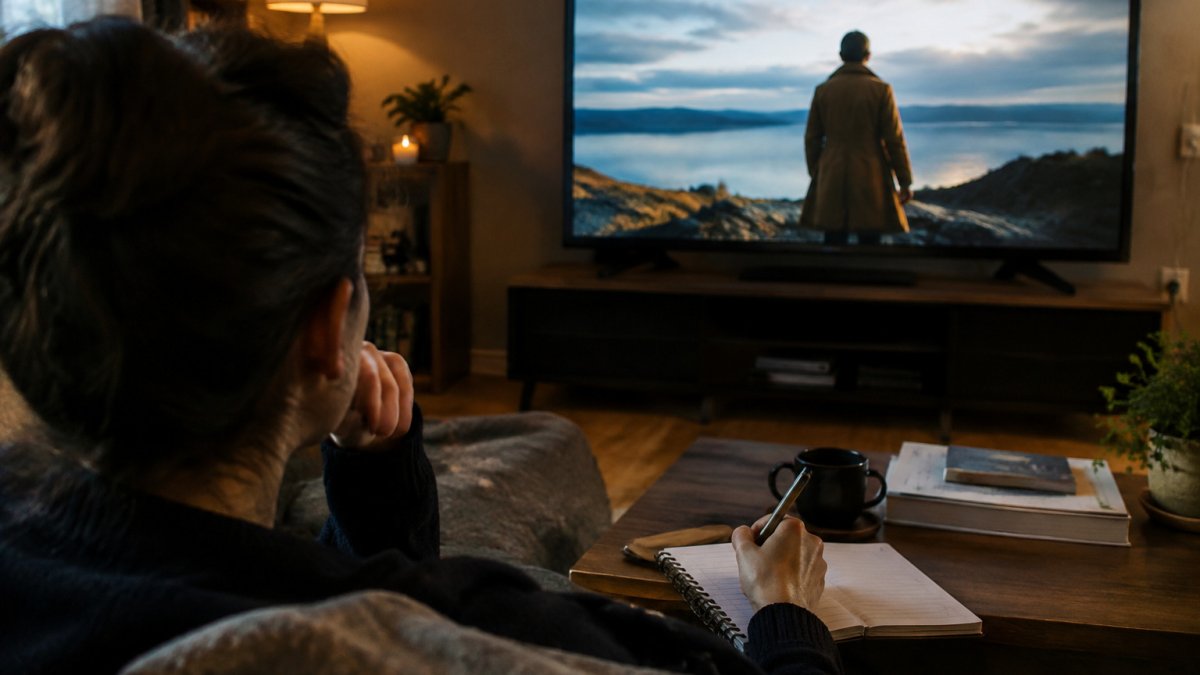
Shot scale is the first thing to notice. A close-up shows emotion. A wide shot shows isolation or context. Indie filmmakers often mix both to keep the viewer off balance.
- Close-up: face or detail, intimate and tense
- Medium shot: waist up, conversational and neutral
- Wide shot: full setting, often used for scale or loneliness
Watch for the rule of thirds too. Many films place a character off-center to create unease. A subject pushed to the edge of the frame can signal that they do not feel in control.
Watch out: do not assume every off-center shot is meaningful. Low-budget films sometimes frame loosely because they had no room to reposition the camera.
Step 2: Track Camera Movement and Point of View
Next, track how the camera moves. A still camera feels observational. A moving camera feels involved.
Common movements to look for include:
- Pan: the camera turns horizontally to follow action or reveal space
- Tilt: the camera turns vertically, often to show scale
- Tracking shot: the camera moves alongside a character
- Handheld: the camera shakes slightly, suggesting urgency or closeness
Point of view matters just as much. A subjective camera shows what a character sees. When the camera mimics a character's eyeline, the audience shares their perspective. Note when the film switches between objective and subjective framing, because that switch often marks a shift in who the story belongs to.
Indie films often use long takes to build tension. A single unbroken shot forces the viewer to sit with a moment. Count how many cuts happen in a sequence and compare that to the emotional beat.
Step 3: Read Lighting, Color, and Mise-en-Scène
Lighting tells you what the film wants you to feel. High-key lighting, with even, bright illumination, usually reads as open or safe.
Ask where the light comes from. Diegetic lighting comes from sources inside the story, like a lamp or a window.
Color is the next layer. Many filmmakers choose a palette and repeat it. A film that favors cool blues may signal distance or sadness.
Mise-en-scène is everything placed in the frame: set design, props, costume, and actor position. Together these create the film's visual language. A cluttered room says something different from an empty one.
Rewards come from repetition. If a color or object returns in several scenes, it may be a visual motif tied to the theme.
Step 4: Break Down a Single Scene Frame by Frame
Pick one short scene, five minutes or less, and study it closely. Pausing and stepping through frames helps you see choices you would otherwise miss. But the frame you see on screen is not the frame the cinematographer shot, it has passed through editing, color grading, and sound. Analyzing only the raw photography will cause you to misread the film's visual argument.
Work through a simple checklist for each shot:
- Note the shot scale and framing.
- Describe the camera movement or lack of it.
- Identify the light source and the overall tone.
- List the key objects and their placement.
- Write one sentence on what the shot does for the story.
- Note how the shot is cut, what comes immediately before and after it.
Keep notes in a simple table so patterns stand out. A table also makes it easy to compare shots later.
| Shot | Scale | Camera | Lighting | Cut rhythm | Purpose |
|---|---|---|---|---|---|
| 1 | Wide | Static | Natural, soft | Long hold | Establish isolation |
| 2 | Close-up | Slow push-in | Low-key, cool | Hard cut in | Build tension |
| 3 | Medium | Handheld | Mixed, warm | Quick cuts | Show conflict |
Add the post-production layer. Once you have the shot list, watch the scene again and ask three questions that most guides skip:
- How has the grade changed the image? Compare the color of the light in the frame to what the light source would actually produce. A warm practical that reads cool on screen has been pushed in the grade. A scene shot at midday that looks like dusk has been heavily manipulated. Indie films often grade toward a single look, teal shadows, crushed blacks, or a warm highlight roll-off, because a consistent grade is cheaper than consistent lighting on set.
- How does the edit control what you see? A cinematographer may compose a beautiful wide shot that the editor never uses, or holds a take the editor cuts after two seconds. Count the cuts in the scene and compare that to the emotional beat. A scene that feels tense because of long takes is doing something different from a scene that feels tense because of rapid cutting, and only one of those is the cinematographer's work.
- What is sound doing to the image? A close-up with a rising score reads differently from the same close-up in silence. Sound design is not cinematography, but it changes how the audience experiences the frame, and ignoring it will cause you to credit the camera for an effect the sound team created.
Frame-by-frame work is slow, but it turns vague impressions into specific evidence you can cite in an essay. The post-production pass is what separates a description of shots from an argument about how the film actually works.
Watch out: do not attribute a graded look to the cinematographer without checking. On many indie productions the director and colorist drive the final look, and the DP's on-set choices may have been deliberately neutral to leave room for the grade. When you write about a visual choice, be clear about which stage of production likely produced it.
Working With Budget Limits and Natural Light
Most cinematography guides are written as if every film has a lighting truck and a full grip crew.
Start by identifying the resourceful techniques that show up again and again in low-budget work:
- Available-light shooting: the scene is lit by windows, streetlights, or practicals already in the location. Look for directionality, a single window creating a hard falloff across a face is a signature of natural-light work.
- Practical-driven lighting: lamps, TVs, and neon inside the frame do the lighting job. When a character switches on a lamp and the exposure visibly shifts, that is a practical doing the work a gaffer would normally do.
- Guerrilla setups: tripods replaced by available surfaces, bounce cards made from foam board, diffusion taped to a window. These leave small tells, slightly soft edges, uneven brightness across a room, or a frame that drifts because the camera is resting on something unstable.
- Limited lens kits: many indie shoots carry two or three primes. If a film keeps returning to the same focal length, that may be a creative choice or simply the lens that was in the bag. Check whether the repetition tracks an emotional pattern before you decide.
- Real locations over sets: a lived-in apartment with mismatched light temperatures often reads as more honest than a dressed stage. Notice whether the production leans into the imperfection or tries to hide it.
A useful exercise is to ask what the constraint forced. A scene shot in a real apartment with window light may feel more lived-in than a studio set.
Natural light changes through the day, so filmmakers often shoot fast to keep continuity. That can create small brightness shifts from shot to shot within a scene.
Budget and craft often meet in the same place. A director who cannot afford elaborate lighting may build a scene around one window and one lamp.
Watch out: not every rough edge is intentional.
Turning Your Observations Into a Film Analysis Essay
Your notes become useful when you turn them into an argument. Start with a clear thesis about how the cinematography supports the film's meaning.
A simple structure works well:
- Introduction: name the film, director, and your central claim
- Body paragraphs: one visual element per paragraph, with a specific shot as evidence
- Conclusion: explain what the visual choices reveal about the story
For each body paragraph, follow a simple pattern: describe the shot, explain the technique, then state its effect on the story. Avoid long plot summaries. Stay focused on how the film looks and why that matters.
Use precise terms like tracking shot, low-key lighting, and shallow depth of field. Define any term the first time you use it. Your reader should be able to picture the frame you describe.
Film analysis writing is a skill that improves with practice. Revise your draft by checking that each claim points to something visible on screen.
Where to Find a Film Analysis Example and Template
If you want to see how a finished analysis looks, look for published examples from film studies courses and academic journals.
Practice with films you can access legally. You can anchor: explore international films to study work from many countries. For beginner-friendly picks to practice on, check our list of world cinema films for beginners.
Ready to try the method on a film you already love? Pick one scene this week, run through the four steps, and write a short paragraph about what the cinematography is doing. For a worked example of frame-by-frame thinking, read our review of Come and See.
Frequently Asked Questions
What should you look for when analyzing cinematography in an indie film?
Start with shot composition, camera movement, and lighting. Note the shot scale (wide, medium, close-up), whether the camera is static or moving, and where light falls on characters. Indie films often rely on natural light and handheld cameras, so pay attention to how those choices create intimacy, unease, or realism. Ask why each choice serves the story, not just what it looks like.
How do camera movement and framing affect a film scene?
Framing tells the viewer where to look and how close to feel. A tight close-up creates intimacy or tension, while a wide shot can isolate a character in their environment. Camera movement adds emotional rhythm: a slow tracking shot can build dread, and a handheld camera can suggest instability. Track how often the camera moves and whether the movement follows a character or stays fixed.
How do you analyze lighting and color in a film?
Identify the light source (natural, practical, or artificial) and whether the scene is high-key or low-key. Note the dominant color palette and whether it shifts across scenes. Warm tones often signal comfort or nostalgia, while cool or desaturated tones can suggest distance or melancholy. Connect these choices to character or theme to move from description to interpretation.
How do you write a cinematography analysis essay?
Open with a thesis about how the cinematography shapes meaning in the film. Support it with two or three specific scenes, describing the shot, the technical choice, and the effect on the viewer. Use terms like mise-en-scene, depth of field, and aspect ratio accurately. Close by explaining how the visual choices reinforce the film's larger themes.