 Ultimate guide
Why Watch Independent International Cinema? 7 Reasons
Quick Summary
Independent international cinema is film made outside the major studio system, usually on smaller budgets, with creative control held by the filmmaker and distribution through festivals and specialty platforms. Watching it exposes you to cultural perspectives, storytelling choices, and risks that mainstream studio releases rarely take.
- Independent films are financed and controlled outside the major studio system, with the filmmaker often keeping creative control.
- Independent, foreign-language, and international are separate labels, and a single film can fit all three.
- Constraint pushes filmmakers toward long takes, fixed frames, and natural locations instead of heavy coverage.
- Start with a film in a familiar genre, then follow one director through two or three films.
- Choose subtitles over dubbing for a first pass, since dubbing flattens performance and removes the original voice.
Table of Contents
- What Is Independent Cinema, and How Is It Different?
- 7 Benefits of Watching International Cinema
- Why Independent International Films Stand Out Artistically
- Best Independent Foreign Films to Start With
- How to Find Independent International Films Without the Guesswork
- Starting Your Own Viewing Path With BINGE Movies & TV
- Frequently Asked Questions
What Is Independent Cinema, and How Is It Different?
Last Updated: November 24, 2026
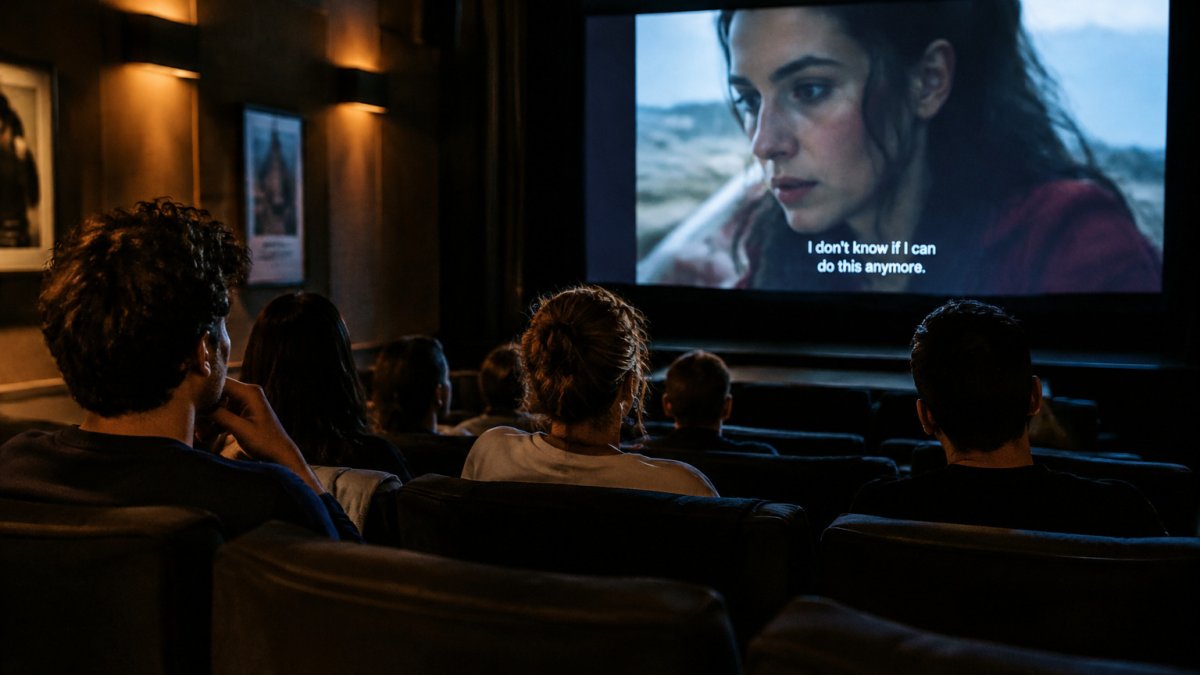
Independent international cinema is film made outside the major studio system, usually with smaller budgets, creative control held by the filmmaker, and distribution through festivals and specialty platforms rather than wide theatrical release. That separation is what gives it room to take risks that studios rarely fund.
Independent cinema is a film produced outside the major studio system, where the director or a small production company retains creative control over the final cut. A U.S. Independent Film Study from the Shorenstein Center argues that independent film deserves recognition for its artistic worth and its influence on society, not just its box office.
Independent vs. Foreign-Language vs. International Films
These three terms overlap, and people use them interchangeably, but they describe different things. Independent refers to how a film is financed and controlled. Foreign-language refers to the spoken language. International is the broadest label, covering films made outside a viewer's home market regardless of who financed them.
A film can belong to all three categories at once. Compare how independent films and Hollywood productions handle visual style and approach in a side-by-side look at why independent films look different. A Korean-language thriller made by a small production house with no studio backing is independent, foreign-language, and international at the same time. A Hollywood studio film dubbed into another language is international in distribution but not independent. Knowing the difference helps you search more precisely.
7 Benefits of Watching International Cinema
Watching independent international cinema gives viewers perspectives, rhythms, and storytelling choices that mainstream releases rarely offer. The benefits are practical as well as cultural, from sharpening your attention to subtitles to exposing you to stories you would never have chosen. Here are the reasons we return to it most often.
Cultural Insight and Exposure to Different Perspectives
A film from another country shows you how people in that place think about family, work, faith, and conflict. The details you notice, such as what characters eat, how they argue, or what they leave unsaid, carry cultural information that a documentary summary cannot convey. That exposure is one of the most valuable things a film can offer.
Stories Beyond Mainstream Hollywood and Realism
Hollywood tends to favor escapist plots built around familiar heroes and clear resolutions. Independent international films more often follow ordinary people through unresolved situations, which many viewers find more honest. The realism is not a lack of ambition; it is a deliberate choice about what a story is for.
Why Independent International Films Stand Out Artistically
Independent international films stand out because constraint forces decisions. When a filmmaker cannot pay for a crowd, a car chase, or a star, the camera has to do the work: a long take holds a face until the audience feels the pressure, a fixed frame lets off-screen sound carry the scene, and natural light turns a room into a character. These are not fallbacks. They are deliberate craft choices that major studio films rarely need to make, and they produce a viewing experience that feels personal rather than manufactured.
The mechanism is worth naming. Studio films typically control meaning through coverage, cutting between angles so the editor can shape the performance later. Independent films more often lock the frame and trust the performer, which is why so many of them feel theatrical or documentary-like at once. A director working with a small crew can also shoot on location instead of a set, so the texture of a real street, apartment, or landscape enters the story.
Concrete examples show the pattern better than adjectives. The Dardenne brothers built a reputation on handheld, close-following camerawork in films such as Rosetta and The Child, keeping the audience physically near a character who is rarely given a stable place to stand. Kelly Reichardt works in long, quiet takes and sparse dialogue in Wendy and Lucy and Certain Women, so small gestures carry the emotional weight. Abbas Kiarostami blurred the line between documentary and fiction in Close-Up, and Apichatpong Weerasethakul lets scenes unfold at a pace that forces viewers to notice ambient sound and landscape. None of these approaches would survive a studio note asking for a faster cut.
This is also where the artistic case connects to the practical one. Because independent films are not built to hit a four-quadrant audience, they can end without resolution, leave a character's motive unexplained, or sit in silence. That can be uncomfortable, and it is supposed to be. The reward is a film that asks you to participate rather than receive.
Watch out: the low-budget label is not a quality guarantee, so treat style as a set of choices to evaluate. A useful test is whether the formal choices serve the story or merely decorate it.
When you watch, try a simple exercise: pause after the first ten minutes and ask what the camera has chosen to show and what it has kept off-screen. That single question will teach you more about a director's vision than any awards list, and it sets up the viewing pathway in the next section.
Best Independent Foreign Films to Start With
Most guides tell beginners to 'start with the classics' and leave it there. A better approach is a staged pathway: begin with films that have clear emotional stakes and familiar genre scaffolding, then widen by region, runtime, and storytelling style. The goal is not to pass a test. It is to build a habit that survives past the first subtitle.
Stage one, start with genre you already know. A thriller, a coming-of-age story, or a family drama gives you a familiar frame while the language and cultural details do the unfamiliar work. Good entry points include Parasite (Bong Joon-ho, South Korea), which moves between comedy, thriller, and social critique with a plot engine that pulls you forward; The Lives of Others (Florian Henckel von Donnersmarck, Germany), a tense surveillance drama with a clear moral arc; and Pan's Labyrinth (Guillermo del Toro, Spain/Mexico), which uses fantasy to structure a story about fascism. These are widely available and widely discussed, which helps when you want context afterward.
Stage two, add a director and follow the thread. Pick one filmmaker and watch two or three films in order. The Dardenne brothers' Rosetta and The Child show a consistent handheld, close-following style. Hirokazu Kore-eda's Shoplifters and Still Walking show how the same director handles family from different angles. Following a director teaches you to see style as a set of recurring decisions rather than a one-off mood.
Stage three, widen by region and runtime. If a two-hour subtitled film feels long, start with something under 100 minutes: Wendy and Lucy (Kelly Reichardt, United States) runs about 80 minutes, and Close-Up (Abbas Kiarostami, Iran) runs about 98. Short runtimes lower the commitment barrier without lowering the craft. Then rotate regions deliberately, one film from East Asia, one from Latin America, one from West Africa or the Middle East, so your viewing does not collapse into a single continental default.
Stage four, learn to watch with subtitles. Read the subtitles for the first few minutes, then let the images carry the scene; you will still catch the meaning, and the visual language becomes easier to follow. For more tips on following dialogue while taking in the visuals, see how to watch world cinema with subtitles effectively. If a film offers both subtitles and dubbing, prefer subtitles for your first pass, since dubbing flattens performance and removes the original voice. Check caption quality before committing: some streaming catalogs offer only burned-in or poorly timed subtitles, which makes a demanding film harder than it needs to be.
Watch out: festival awards are a useful filter for craft, but they are not a beginner's curriculum. A Palme d'Or winner can be a difficult first film, so use awards to shortlist and runtime, genre, and availability to choose the actual starting point.
A practical first month looks like this: week one, one genre film from a country you know little about; week two, a second film by the same director; week three, a film under 100 minutes; week four, a film from a different region than the first three. Note one thing that surprised you after each. That habit turns 'where do I start' into a repeatable method.
The staged pathway below groups the recommended films and their details so you can plan a first month of viewing.
| Film | Director | Country | Runtime |
|---|---|---|---|
| Wendy and Lucy | Kelly Reichardt | United States | About 80 minutes |
| Close-Up | Abbas Kiarostami | Iran | About 98 minutes |
| Rosetta | Dardenne brothers | Belgium | Not stated |
| Shoplifters | Hirokazu Kore-eda | Japan | Not stated |
How to Find Independent International Films Without the Guesswork
Finding these films is harder than it should be because they are scattered across festivals, specialty distributors, and small platforms. Compare options in a guide to the best streaming for international cinema. A practical approach is to follow festival award winners, check which films a curated service has added recently, and read short critic summaries before committing to two hours. Watch for films that list their country of origin and original language, since that information is often missing from general streaming catalogs.
Another reliable method is to pick a country or director and follow their work across several films. A Journal of Science Communication article on science representation in independent films suggests that independent cinema can offer more inclusive and alternative perspectives than mainstream releases, which makes it a useful lens when you are choosing what to watch next.
Starting Your Own Viewing Path With BINGE Movies & TV
Begin with one film this week, then add a second from a different country before the month is out. Building a viewing habit across regions and styles gives you a far richer sense of world cinema than any single title can. BINGE Movies & TV offers a 7-day free trial, so you can explore the catalog without commitment. Start your 7 day FREE Trial and find the first film on your list.
Frequently Asked Questions
What does independent cinema mean?
Independent cinema refers to films made outside the major studio system, usually with smaller budgets and greater creative control for the filmmaker. Independent films are often financed through private investors, grants, or festival funding rather than large studios. This freedom tends to produce more personal, experimental, or niche stories that studios might consider too risky. Independent cinema is a category of how a film is made and financed, so it can include films from any country and in any language.
Why should you watch foreign films?
Foreign films give you access to storytelling traditions, humour, and social concerns that differ from Hollywood conventions. Watching them builds cultural understanding and exposes you to perspectives you would not encounter in mainstream releases. Many viewers find that subtitled films hold their attention more closely because they require active engagement. Starting with films from a single country or director can make the experience feel more manageable and rewarding.
Do you need subtitles to enjoy international movies?
Subtitles are the most common way to watch international films, and most viewers adjust to them within a few minutes. Reading subtitles does not prevent you from following visual storytelling, performances, or cinematography. Many international films also rely less on dialogue than Hollywood productions, so the images carry more of the story. If you prefer, you can watch a film once with subtitles and then again later to notice details you missed.
Where can you watch independent international films?
Independent international films are often hard to find on mainstream platforms, which is why curated services exist. BINGE Movies & TV offers a selection of independent and festival films from creators around the world, with new titles added regularly. The platform supports streaming and offline downloads across smart TVs, Chromecast, Apple TV, phones, and tablets. You can start with the free trial to see whether the catalogue suits your tastes before committing to a subscription.