 blog
blog
MUBI vs IndieFlix: Which Indie Streaming Service Wins
Table of Contents
- MUBI vs IndieFlix: A Head-to-Head Breakdown
- What Sets Independent Film Streaming Services Apart
- Pricing, Plans, and Trial Periods
- Curated Selection and Catalog Approach
- Best Streaming Services for Indie Movies: Offline Viewing and Device Support
- MUBI Alternatives Worth Considering
- Which Service Should You Choose?
- Frequently Asked Questions
Last Updated: October 6, 2026
MUBI vs IndieFlix: A Head-to-Head Breakdown
When you're tired of Netflix's algorithm and mainstream Hollywood formulas, indie streaming services offer something different. MUBI and IndieFlix both promise curated cinema, but they take fundamentally different approaches. At BINGE Movies & TV, we've analyzed how these platforms compare so you can decide which one fits your viewing habits.
The question isn't just price or catalog size, it's philosophy. One service believes less is more; the other believes indie films deserve volume and accessibility.
What Sets Independent Film Streaming Services Apart
Independent film streaming services reject the "throw everything at the wall" model that defines mainstream platforms. Instead, they curate, editorialize, and treat film discovery as an art form rather than a data problem.
According to research published in SAGE Journals' study on audience experiences with curated streaming, users appreciate indie streaming platforms' limited-choice model compared with Netflix's overwhelming catalog. However, the same study found that viewers can also experience frustration, stress, and inadequacy when selections feel too restrictive.
That tension defines the category: cinephiles want discovery without paralysis and quality over quantity, but they don't want to feel trapped by someone else's taste.
Some platforms embrace "less is more" completely; others balance curation with depth. Where each service lands on that spectrum matters more than feature checklists.
Pricing, Plans, and Trial Periods
Pricing is where indie streaming services diverge most sharply. Neither charges Netflix-level prices, but the structures reveal how each service thinks about its audience.
MUBI's Subscription Model
MUBI's pricing has shifted over time. According to The New York Times coverage of streaming alternatives, MUBI costs $14.99 per month as of 2024. Earlier reporting from Los Angeles Times analysis of indie cinema services listed the service at $10.99 monthly in 2022, suggesting price adjustments as the platform has grown.
The service positions itself as premium curation: you're paying for editorial taste, not volume. MUBI adds roughly 30 handpicked films monthly and rotates its library continuously, so what's available today might be gone in 30 days.
That model appeals to serious cinephiles who see the rotation as a feature, not a bug, it creates urgency and forces discovery, but frustrates viewers who want a watchlist they can return to later.
IndieFlix Pricing and Options
IndieFlix takes a different pricing approach. The platform offers a 7-day free trial, then moves to a subscription model starting at $4.99 per month or $39.99 per year according to IndieFlix official pricing.
That's significantly cheaper than MUBI, and the annual option offers better value for committed viewers. The lower price point removes friction for casual indie film fans who want to explore without major financial commitment.
The trade-off: IndieFlix doesn't rotate its catalog like MUBI. You get a broader, more stable selection of independent films, documentaries, and shorts that grows over time, with titles staying available longer.
| Service | Starting Price | Trial Period | Annual Option | Library Model |
|---|---|---|---|---|
| MUBI | $14.99/month | Varies by region | $119.88/year | Rotating (30 films/month) |
| IndieFlix | $4.99/month | 7-day free | $39.99/year | Stable/Growing catalog |
Curated Selection and Catalog Approach
Here's where the philosophical difference becomes tangible: MUBI and IndieFlix curate differently because they serve different viewer types, and the mechanics of each catalog matter more than the marketing language.
How MUBI's rotating library actually works
MUBI's model is closer to a repertory cinema than a streaming library. It licenses a small slate, historically roughly 30 titles, adding one new "film of the day" while removing an older title on a rolling basis. Each month is organized around a theme or retrospective, so the catalog reads like a programmed season rather than a searchable archive.
That structure produces a few concrete consequences:
- Availability is time-boxed. A film you see on day one may be gone by day 30. Watchlists help you remember titles, but they don't guarantee the title stays licensed.
- Discovery is editorial, not algorithmic. You are pushed toward a curated set rather than browsing thousands of rows.
- Thematic coherence is the selling point. A month built around, say, a national cinema or a director retrospective lets you watch several related films in sequence.
MUBI also operates MUBI Notebook, its editorial arm, publishing essays, interviews, and festival coverage that contextualize the rotating slate, part of the product for viewers who want criticism alongside the film.
How IndieFlix's catalog is structured
IndieFlix positions itself as a broader independent-film library rather than a programmed season. Its catalog spans features, documentaries, shorts, and international titles, and it doesn't rotate on the same aggressive schedule, titles stay available longer, making it better for a watchlist you return to over months rather than days.
The trade-off is editorial focus: because IndieFlix prioritizes breadth and stability, the experience is closer to a traditional on-demand library than a curated festival program.
The practical difference in one sentence
MUBI asks you to show up this month for a specific program. IndieFlix asks you to browse a stable shelf of independent work whenever you're ready.
A dated snapshot, not a permanent fact
Catalog sizes and titles change constantly on both services, and neither publishes a fixed, audited library count. Treat any number quoted online as a snapshot, not a spec. The durable differences are structural: rotation cadence, editorial framing, and whether titles persist in your watchlist.
For viewers who want both a rotating editorial slate and a persistent library, the two services are complements, not substitutes.
Best Streaming Services for Indie Movies: Offline Viewing and Device Support
Most MUBI vs IndieFlix write-ups stop at price and catalog, leaving practical questions unanswered: which apps exist, how many people can watch at once, what video quality you get, and whether subtitles and accessibility features are usable.
Apps and platforms
Both services cover the expected ground: iOS and Android phones and tablets, web browsers, and the major connected-TV ecosystems (Apple TV, Android TV/Google TV, Amazon Fire TV, and Roku). Differences show up in the details:
- MUBI has historically invested more in its own apps and in the presentation layer, the interface is part of the brand, and the apps reflect that.
- IndieFlix has historically leaned on broad availability and a simpler interface, which is consistent with its lower price point and casual-viewer positioning.
Because app support changes with each release cycle, verify the current list on each service's official help page before subscribing.
Simultaneous streams and account sharing
Neither MUBI nor IndieFlix has historically marketed itself as a family-plan service the way Netflix or Disney+ do. If you need multiple people watching different titles simultaneously on one account, check the current terms on each service's site rather than assuming from a review.
Video quality and audio
Both services stream in HD, with higher tiers where source material and connection allow. For art-house and repertory cinema, the source master matters more, a restored 4K scan of a classic looks dramatically better than a standard-definition transfer, regardless of bitrate. MUBI's curation sometimes gives access to recent restorations unavailable elsewhere.
Subtitles and accessibility
International cinema lives or dies on subtitle quality:
- MUBI typically offers English subtitles on non-English titles and has expanded subtitle language options over time. Because so much of its catalog is international, subtitle presentation is core to the product.
- IndieFlix includes subtitles on its international and non-English titles, but the breadth of subtitle languages and the availability of accessibility features like audio description varies by title.
If you rely on audio description, closed captions, or a specific subtitle language, check the individual title page before committing, neither service guarantees these features across the entire catalog.
Offline viewing
This is the honest gap in both services: neither MUBI nor IndieFlix has historically made offline downloads a headline feature. If you travel frequently, commute without reliable signal, or watch on planes, offline access is the single feature most likely to push you toward a different service, or toward using MUBI and IndieFlix as at-home complements rather than your only indie subscription.
What this means for your choice
If you watch primarily at home on a TV or laptop, device support is a non-issue. If you need multiple simultaneous streams, offline downloads, or specific accessibility features, that's where the decision actually gets made.
MUBI Alternatives Worth Considering
MUBI isn't the only curated indie streaming option. The category has grown because demand exists for alternatives to both mainstream platforms and MUBI's rotating-library model.
Criterion Channel focuses on classic and contemporary cinema with deep film history context, appealing to viewers interested in cinema as art form. Its selection is smaller than MUBI but more focused on canonical works.
OVID.tv targets art-house and independent cinema with a similar rotating-library approach to MUBI but with different editorial priorities. It emphasizes experimental and avant-garde work.
Fandor (now part of the Eventive platform) combines indie films with filmmaker interviews and educational content, appealing to aspiring filmmakers and serious students of cinema.
Each alternative serves a specific viewer type. MUBI remains the most mainstream of the curated indie services, making it a good starting point for new viewers.
Which Service Should You Choose?
The choice between MUBI and IndieFlix depends on three factors: budget, engagement level, and viewing habits.
Choose MUBI if you're a committed cinephile who wants expert curation, enjoys thematic discovery, and sees the rotating library as a feature rather than a limitation, and you don't mind paying a premium for editorial taste and limited availability windows.
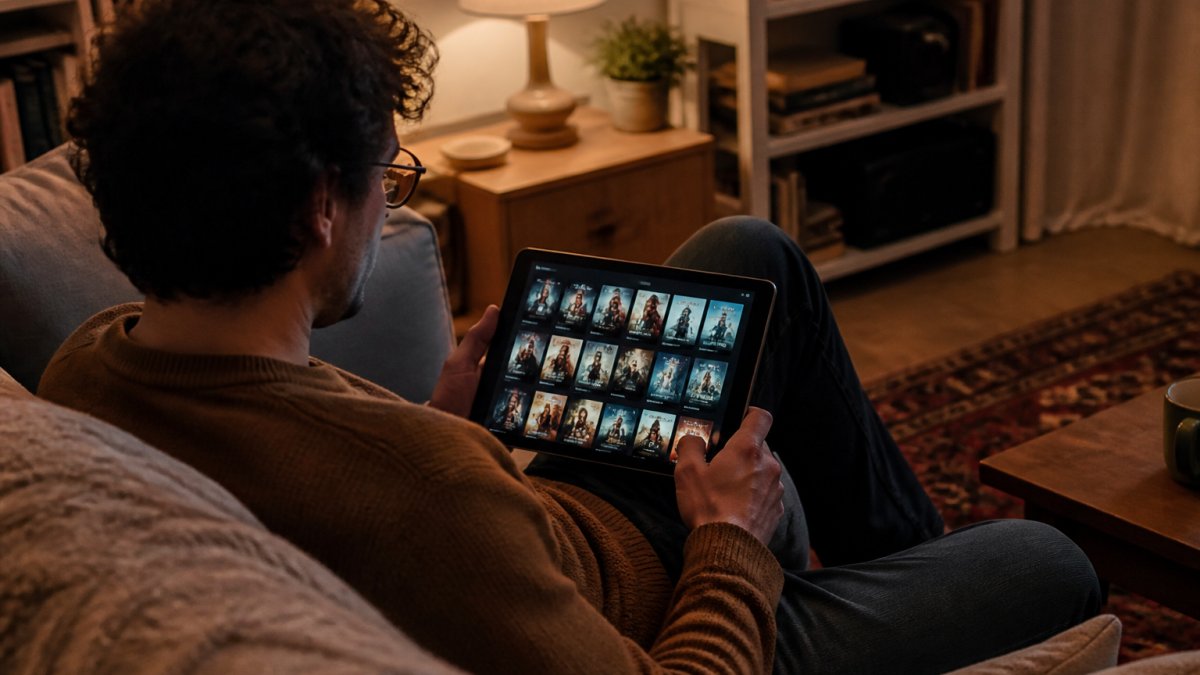
Choose IndieFlix if you want an affordable entry point into indie cinema, prefer a stable catalog you can return to, and value breadth over deep curation.
Choose BINGE Movies & TV if offline viewing is essential to your lifestyle, you want daily additions to keep the catalog fresh, and you need multi-device support without extra costs.
The real answer: most serious indie film viewers eventually use multiple services. MUBI handles festival-circuit discoveries, IndieFlix covers the broader indie catalog, and BINGE Movies & TV ensures you can watch anywhere, anytime.
The indie streaming space has matured enough that you don't have to choose between affordability and quality. MUBI and IndieFlix represent different philosophies, but both deliver genuine alternatives to mainstream platforms. The best choice depends on whether you want curation that challenges you or a catalog that lets you explore at your own pace.
Frequently Asked Questions
What is the difference between MUBI and IndieFlix?
MUBI curates 30 handpicked films each month, rotating its library regularly to encourage discovery. IndieFlix offers a broader catalog with lower pricing and a 7-day free trial. MUBI focuses on festival-circuit films and emerging filmmakers, while IndieFlix emphasizes accessibility and affordability for indie film lovers. The choice depends on whether you prefer curation or variety.
Which independent film streaming service is best for cinephiles?
MUBI appeals to serious cinephiles who value editorial curation and festival selections. Research shows users appreciate MUBI's limited-choice model compared with mainstream platforms, though some experience frustration with limited inventory. IndieFlix suits cinephiles seeking broader indie catalogs at lower cost. The best choice depends on whether you prioritize curated depth or catalog breadth.
Can you download movies on MUBI or IndieFlix for offline viewing?
Offline viewing capabilities vary by platform. BINGE Movies & TV, an alternative indie streaming service, explicitly supports downloading titles for offline access across multiple devices. Check each platform's app features to confirm offline download support, as this feature is increasingly important for travelers and commuters seeking reliable access without internet connectivity.
Does MUBI or IndieFlix offer more international films?
Both platforms emphasize international cinema as core to their identity. MUBI's curation includes significant international representation from film festivals worldwide. IndieFlix similarly prioritizes global indie productions. The specific international titles available depend on licensing agreements in your region. Research suggests digitalization has expanded availability, though regional restrictions still apply to some titles.