 listicle
Best Streaming Platforms for Filmmaker Interviews
Table of Contents
- Why Streaming Platforms Matter for Filmmaker Interviews
- Quick Comparison: Top Platforms for Filmmaker Interviews
- BINGE Movies & TV: Curated Independent Cinema and Creator Spotlights
- Netflix: Documentary Filmmaking and Behind-the-Scenes Access
- Best Software for Remote Film Interviews and Technical Workflow
- Filmmaker Interview Questions Template and Professional Standards
- Best Practices for Film Interview Lighting and Audio Setup
- Which Platform Should You Choose?
- Frequently Asked Questions
Last Updated: October 9, 2026
Why Streaming Platforms Matter for Filmmaker Interviews
Streaming platform filmmaker interviews build audience connection, share creative vision, and establish credibility. A streaming platform for filmmaker interviews shapes how your content reaches audiences, how professionally it's presented, and whether viewers can find it.
The right platform balances technical quality, discoverability, and flexibility, some prioritize production values, others independent voices, a few offer both plus offline downloads.
Below, we walk through options for hosting and distributing streaming platform filmmaker interviews, from independent cinema platforms to remote recording tools.
Quick Comparison: Top Platforms for Filmmaker Interviews
| Platform | Best For | Key Strength | Free Option |
|---|---|---|---|
| BINGE Movies & TV | Independent filmmakers and curated cinema | Curated discovery, daily new content, offline downloads | 7-day free trial |
| Netflix | Documentary filmmaking and high-production interviews | Massive reach, professional production standards | No |
| Max | Prestige documentaries and behind-the-scenes content | HBO archive depth, filmmaker Q&As | No |
| Tubi | Budget-conscious exploration of indie cinema | Free, ad-supported access to hidden gems | Yes, fully free |
| Amazon Prime Video | Mixed mainstream and independent film access | Massive library, rental/purchase flexibility | No |
| Apple TV+ | Premium, original filmmaker-driven narratives | High-budget production quality | No |
BINGE Movies & TV: Curated Independent Cinema and Creator Spotlights
BINGE Movies & TV is our top pick for filmmakers seeking genuine discovery. The platform specializes in bold, original independent films from visionary creators worldwide, exactly the work that gets buried on mainstream services. Host filmmaker interviews through BINGE and your content appears alongside award-winning festival favorites and hidden gems.
New content is added daily, so your filmmaker interviews stay visible in fresh rotations rather than disappearing into an archive. The audience actively seeks independent voices and emerging talent.
BINGE streams across Smart TVs, Chromecast, Apple TV, phones, and tablets at no extra cost. Offline downloads matter for audiences who travel or face unreliable internet: a cinematographer can download an interview for a flight, and a festival attendee in a remote venue can watch without buffering.
Viewers come specifically to discover new voices, so your interview sits alongside documentaries, experimental films, and visionary narratives rather than competing with superhero franchises.
Netflix: Documentary Filmmaking and Behind-the-Scenes Access
Netflix is a heavyweight in documentary filmmaking, producing original features that reach global audiences and set industry-wide production standards.
Netflix's strength lies in its documentary archive and filmmaker Q&A content: behind-the-scenes interviews, director's commentary, and production breakdowns. If your filmmaker interviews emphasize technical craft, cinematography, editing, sound design, Netflix's audience expects that depth.
The tradeoff is significant. Netflix's library rotates constantly, so your interview may disappear after a contractual window. The algorithm prioritizes engagement metrics, your interview competes with thousands of titles, and editorial approval means less creative control.
Research on streaming services and creative decision-making in the film industry shows that filmmakers often navigate complex creative compromises when working with major platforms. Netflix demands high production values but also editorial oversight that can reshape your original vision.
Best Software for Remote Film Interviews and Technical Workflow
Most guides stop at "use good lighting and a decent mic." That collapses the moment you record a two-camera interview with a director in another city and need clean, sync-ready footage.
There are three categories of tool, and conflating them is the most common mistake.
1. Cloud recording studios (local capture, cloud sync). These record each participant locally, then upload lossless files to the cloud, the single biggest quality lever in remote interviews.
2. Video conferencing with cloud recording (Zoom, Google Meet). Zoom remains the default because every subject already has it. The trade-off is fidelity: recordings are compressed, audio is mixed, and video is capped below what a documentary cut tolerates.
**3.
What to actually check before you commit to a platform:
- Local recording at full resolution, not just cloud recording. If the platform only records the compressed stream, it is a meeting tool, not a production tool.
- Separate audio tracks per speaker. Mixed audio cannot be fixed in post. Separate tracks can.
- Frame rate and resolution control. For interviews intended to intercut with film footage, match your project's frame rate (commonly 23.976 or 24 fps for narrative-adjacent work, 25 or 30 for broadcast). A platform that locks you to 30 fps will fight your edit.
- File format and codec. You want something your NLE accepts natively, ProRes, DNxHD, or high-bitrate H.264. Proprietary formats add a transcode step and risk.
- Backup and recovery. Remote interviews fail. A platform that keeps a redundant cloud copy after the local file uploads saves entire projects.
Where organization tools fit. Recording is only half the workflow.
A practical default: run the conversation on the platform your subject already has, capture locally on both ends, and keep a cloud recording studio in reserve for the interviews that matter most.
Filmmaker Interview Questions Template and Professional Standards
Professional filmmaker interviews follow structural patterns that separate polished conversations from casual chats. Your questions shape pacing, reveal depth, and guide viewers through the filmmaker's creative thinking.
Strong questions move from accessible entry points to deeper creative philosophy. Start with the project: "What drew you to this story?" Then move to decision-making: "Why did you choose this cinematographer?" Finally, explore reflection: "What do you hope audiences take from this film?"
The template below provides a framework you can adapt for your specific filmmaker and project:
Filmmaker Interview Template:
-
Project Origin (2-3 minutes)
- What inspired this film?
- How long was the development process?
- What was your initial creative vision?
-
Creative Decisions (4-5 minutes)
- Walk us through your cinematography approach.
- How did you work with your editor?
- What was your biggest creative challenge?
-
Technical Workflow (3-4 minutes)
- What equipment and tools shaped your production?
- How did you approach sound design?
- What would you do differently with unlimited budget?
-
Broader Perspective (3-4 minutes)
- What does independent filmmaking mean to you?
- How do you see the industry evolving?
- What advice would you give emerging filmmakers?
-
Closing Reflection (2 minutes)
- What's next for you creatively?
- How do you want audiences to experience this film?
This structure typically runs 15-25 minutes. Professional standards expect clear audio, steady camera work, and intentional framing, not perfection, but deliberate craft.
Best Practices for Film Interview Lighting and Audio Setup
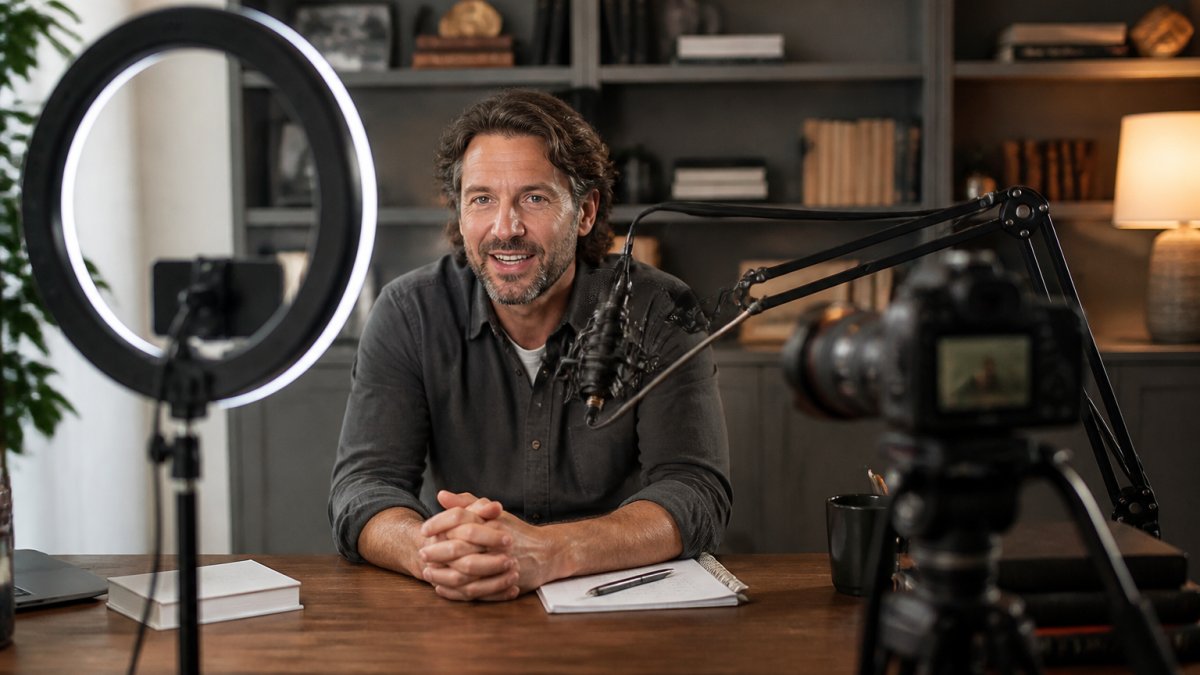
Lighting and audio are what viewers register before they consciously evaluate anything else. Bad lighting makes a subject look tired; bad audio makes them sound untrustworthy.
Lighting: aim for consistency, not drama.
The goal is a clean, repeatable look that survives editing. A single soft key light placed slightly off-axis at eye level, two to three feet from the subject, removes harsh shadows and reads as natural.
Audio: the part that actually ruins interviews.
Audio matters more than most creators admit, the subject's voice is the content. A dedicated microphone, even a basic USB condenser in the $50-150 range, dramatically outperforms built-in camera or laptop audio.
For remote interviews, the audio problem is structural: you're capturing a compressed stream from an unknown room. Two mitigations work reliably.
The checklist that prevents most disasters:
- Record in the quietest available space. Close windows, silence phones, and ask household members to stay quiet. Air conditioning hum, traffic, and keyboard clicks all become distracting in post.
- Test levels before you roll. Peaking audio cannot be recovered; a two-minute check prevents thirty minutes of unusable footage.
- Confirm framing includes the subject's face and upper body, with headroom that leaves room to reframe in a 16:9 or vertical cut.
- For remote interviews, confirm the subject's internet connection is stable and ask them to plug in rather than rely on battery.
- Record a few seconds of room tone at the start of every session. Editors will thank you.
Professional standards don't require expensive equipment, just intentional preparation and, for remote work, a platform that captures each side locally.
Which Platform Should You Choose?
Your choice depends on your goal. If you're building an audience for independent cinema, BINGE Movies & TV offers the most direct path: your filmmaker interviews reach viewers already seeking emerging voices, daily rotation keeps your work visible, and offline downloads serve audiences who value flexibility.
If you want maximum reach and will work within editorial constraints, Netflix provides global audiences and production credibility. It requires more resources and patience, but the scale is undeniable.
For filmmakers managing multiple interviews or building documentary projects around conversation, Storyflow handles organizational complexity other tools ignore, a production tool, not a distribution platform.
Most filmmakers benefit from a hybrid approach: use Storyflow or similar tools to organize interviews during production, then distribute final content through platforms like BINGE that align with your audience and creative values.
Frequently Asked Questions
What makes the best streaming platform for filmmaker interviews?
The best streaming platform for filmmaker interviews combines high-quality video and audio delivery, reliable hosting infrastructure, and audience discovery features. Look for platforms that support high-definition capture, offer multi-device streaming, and provide editorial curation or discovery tools. BINGE Movies & TV stands out by curating independent cinema and filmmaker-focused content, allowing emerging creators to reach cinephiles actively seeking authentic industry insights. The platform's daily content additions and global distribution ensure interviews reach engaged audiences who value creative storytelling.
Should I host filmmaker interviews on a podcast or video streaming platform?
Video platforms better serve filmmaker interviews because they capture visual elements essential to the medium: cinematography discussions, lighting demonstrations, and on-set storytelling benefit from visual context. Audio-only podcasts work for pure conversation but miss the visual craft filmmakers want to showcase. Streaming platforms like Netflix excel at filmmaker interviews through documentaries and behind-the-scenes features, while BINGE Movies & TV emphasizes visual storytelling and creative process through curated independent cinema. Choose video streaming if your interviews center on visual technique or production craft.
What software is best for recording high-quality filmmaker interviews?
Dedicated tools like Storyflow are designed specifically for documentary filmmakers managing interview-heavy projects, offering centralized research and transcript organization. For remote recording, professional options include Riverside.fm or SquadCast, which capture high-fidelity audio and video separately for post-production flexibility. Local recording via OBS Studio or Camtasia provides cost-effective quality control. The key is separating audio and video tracks, using external microphones for audio fidelity, and capturing at least 1080p resolution. After recording, platforms like BINGE Movies & TV provide the distribution infrastructure to reach film audiences globally.
How do I know if a streaming platform has the filmmaker interviews I want to watch?
Check the platform's content library and curation approach. BINGE Movies & TV adds new independent films daily and curates content around emerging filmmakers, making it easy to discover interviews and behind-the-scenes content from visionary creators. Netflix offers extensive documentary archives with filmmaker Q&As and production insights. Read user reviews and sample the platform's free trial to assess whether the interview content aligns with your interests. Look for platforms that highlight filmmaker spotlights, production stories, and industry insights rather than generic entertainment.
Can I download filmmaker interviews for offline viewing?
Yes, BINGE Movies & TV allows you to download titles for offline viewing across multiple devices, making it ideal for travelers or those without consistent internet access. This feature is particularly valuable for film festival attendees or professionals who need to access filmmaker interviews while traveling. Most premium streaming platforms including Netflix and Max offer offline download capabilities on select content. Check the platform's app specifications and device compatibility before committing, as offline features vary by subscription tier and device type.
The best streaming platform for filmmaker interviews matches your audience, your production resources, and your creative independence priorities. BINGE Movies & TV connects you with viewers actively seeking independent voices and emerging filmmakers. Start your 7-day free trial and see how your filmmaker interviews reach audiences who actually want to discover new creative perspectives.