
 listicle
Benefits of Curated Streaming Platforms 2026
Table of Contents
- Why Curated Streaming Platforms Matter in 2026
- Human Curation vs Algorithm Streaming: What Actually Works
- How Curated Platforms Solve Content Fatigue and Choice Overload
- Essential Features for Cinephile Streaming Platforms
- The Business Case: Why Retention Beats Growth in 2026
- The Rise of FAST Channels and Simplified Discovery
- Curated Streaming Platforms vs Mainstream Services: Real Differences
- Frequently Asked Questions
Last Updated: October 1, 2026
Why Curated Streaming Platforms Matter in 2026
The global video streaming market is valued at USD 277.25 billion in 2026, yet most viewers feel more lost than ever. According to Ask Attest's 2026 streaming retention research, 50% of American streaming subscribers cite regular usage as the top factor for keeping their subscriptions. That number tells you something crucial: people don't stay for massive catalogs. They stay because they actually watch what's in front of them.
Curated streaming platforms differ fundamentally from mainstream alternatives. The paradox of choice has become unbearable: too many options, too little time, and algorithms that optimize for engagement rather than satisfaction have left viewers exhausted.
The data supports this. Research from Georgia State University's 2025 study on recommendation systems found that successful recommendation systems increase customer loyalty, trust, and brand satisfaction, which directly correlates to increased company profits. But here's what most platforms miss: human curation beats algorithmic precision when it comes to building genuine connection with content.
Curated streaming platforms solve this by making editorial choices for you, not to limit options, but to eliminate friction between deciding what to watch and enjoying it.
Human Curation vs Algorithm Streaming: What Actually Works
The algorithm-driven approach dominated the last decade, but the numbers tell a different story now.
Algorithmic systems optimize for engagement, not satisfaction. The algorithm learns to serve what keeps you clicking, not what enriches your experience. Over time, your feed narrows and diversity evaporates.
Human curation flips this. An editor picks films because they're remarkable, bold, or thought-provoking, considering thematic connections, visual style, and storytelling innovation. An algorithm would never recommend a slow-burn arthouse film to an action-lover, but a human curator might, because growth happens when you discover something that challenges you.
According to ScienceDirect's 2025 research on platform integration, the seamless integration of streaming platforms with other services encourages subscriptions, particularly when platforms frequently refresh content. But content refresh alone isn't enough. The curation layer determines whether that new content actually reaches the people who'll love it.
Netflix built its empire on algorithmic recommendation, yet now invests heavily in editorial teams and human-driven content discovery, recognition that algorithms plateau while human judgment builds loyalty and reduces churn in ways mathematics cannot.
BINGE Movies & TV operates on this principle: every film is selected by people, creating a fundamentally different experience than algorithmic suggestions.
How Curated Platforms Solve Content Fatigue and Choice Overload
Decision paralysis in streaming is cognitive, not preference-based. Thousands of titles trigger evaluation fatigue: reading synopses, checking ratings, comparing genres. After 10-15 minutes, you either abandon the choice or rewatch something familiar, defeating the subscription's purpose.
Psychologist Barry Schwartz's research on the "paradox of choice" shows that beyond 5-7 meaningful options, additional choices increase anxiety and decrease satisfaction. Streaming platforms with 5,000+ titles push users far beyond this threshold.
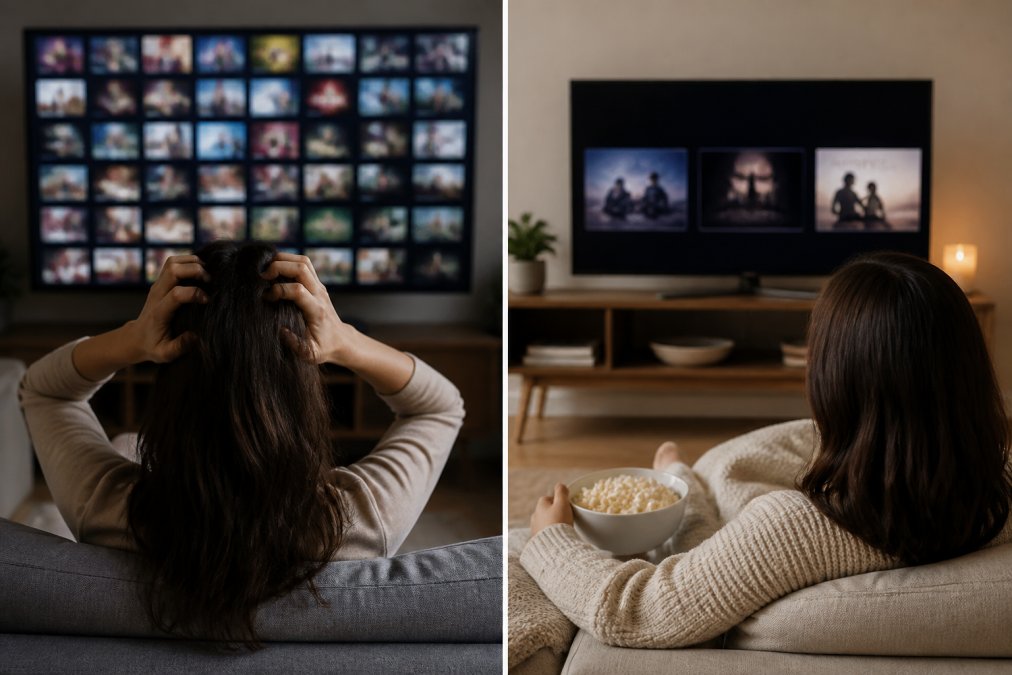
Curated platforms operate within the psychological "sweet spot": carefully selected options instead of 5,000. This reduction is cognitive relief. Your brain evaluates without exhaustion because the curator has filtered for quality, thematic coherence, and originality.
The mechanism works on multiple levels:
Reduced Cognitive Load: Fewer options mean fewer comparisons, consuming less mental energy and allowing clear thinking instead of paralysis.
Increased Trust and Accountability: Human curators stake their reputation on selections, creating a psychological contract. Algorithms optimize for engagement metrics, not satisfaction, a difference users sense intuitively.
Narrative Coherence: Thematic organization, "Films About Resilience," "Breakthrough Debuts", reduces cognitive burden by providing context. You're exploring curated ideas, not random titles.
Completion and Satisfaction: Lower cognitive friction increases follow-through. People actually watch what they select, driving measurable satisfaction and retention.
In 2026, streaming fatigue is the dominant complaint. Platforms shifting toward "fewer filler" titles and "smarter release pacing" see improved retention. Curated services add films worth your time, reducing noise that creates decision paralysis.
The counterintuitive truth: constraints create freedom. By limiting your options to curated selections, platforms paradoxically expand your ability to enjoy what you watch.
Essential Features for Cinephile Streaming Platforms
Not all curated services are equal. The best platforms combine editorial excellence with thoughtful technical design, and increasingly, with accessibility and privacy protections that generic algorithmic platforms overlook.
Personalized Discovery Within Curation matters more than generic personalization. A platform should learn your taste while respecting the curator's judgment, recommendations that feel like suggestions from a knowledgeable friend. The best platforms balance preference memory with exposure to new voices.
Accessibility-First Curation is a feature most platforms ignore but cinephiles with accessibility needs require. This includes comprehensive closed captioning on every title, audio descriptions for visual storytelling, customizable playback controls (subtitle size/color, variable speeds, high-contrast modes), and thematic curation for neurodivergent viewers (organized by sensory intensity, pacing, or content warnings). Curated platforms can enforce these standards across their entire library because it's smaller and more manageable than mainstream services.
Privacy and Data Ethics represent an emerging differentiator. Algorithmic platforms require extensive tracking to build behavioral profiles. Curated platforms operate with minimal tracking, you don't need invasive data collection to recommend thoughtfully selected films. This matters increasingly in 2026 as users grow skeptical of surveillance-based models.
A privacy-conscious curated platform offers transparent data policies, optional anonymous browsing, minimal tracking, and clear explanation of data collection.
This isn't just ethical, it's a retention advantage. Users who trust that their viewing habits aren't being monetized for ad targeting stay subscribed longer.
Offline Viewing Capability separates serious platforms from casual ones. Cinephiles travel. They commute. They want to watch films without relying on internet connectivity. Downloads should work seamlessly across devices, with clear expiration policies and no surprise restrictions.
Multi-Device Seamlessness is non-negotiable. A film you start on your Smart TV should resume on your phone. Your watchlist should sync instantly. Your preferences should carry across platforms. This sounds basic, but most services still struggle with it. Curated platforms, with smaller libraries, can implement this more reliably.
Editorial Context elevates the experience beyond mere content delivery. This includes:
- Filmmaker interviews and director's notes
- Thematic essays explaining why films were selected
- Historical context for older or international films
- Curator bios so you understand the taste guiding selections
- "Why We Chose This" statements for every featured title
You're not just choosing a film; you're understanding why it matters. This transforms browsing into learning and builds deeper connection to the platform's curation philosophy.
Release Strategy Clarity prevents the frustration of wondering when new content arrives.
Search and Discovery Without Algorithmic Ranking is subtle but important. Instead of "Most Popular" or "Trending Now" (which favor engagement over quality), curated platforms can organize by:
- Thematic collections ("Films About Grief," "Breakthrough Cinematography")
- Filmmaker retrospectives
- Award winners and festival selections
- Release date (newest curated additions)
- Runtime or pacing (for decision-making based on available time)
The Business Case: Why Retention Beats Growth in 2026
The streaming wars of the early 2020s were fought on subscriber growth. Add millions of users, raise prices, chase profitability. That model is dead.
The Rise of FAST Channels and Simplified Discovery
FAST (Free Ad-supported Streaming TV) channels represent a major shift in how platforms approach content discovery. Instead of algorithmic ranking, FAST channels replicate linear, lean-back television. You turn it on and watch what's playing. No decisions. No scrolling.
Curated Streaming Platforms vs Mainstream Services: Real Differences
The comparison reveals stark contrasts in philosophy and execution.
| Dimension | Curated Platforms | Mainstream Services |
|---|---|---|
| Selection Method | Editorial judgment | Algorithmic ranking |
| Content Volume | Focused library | Massive catalog |
| Discovery Friction | Minimal | High |
| Retention Focus | User satisfaction | Engagement metrics |
| Content Refresh | Strategic additions | Volume-based additions |
| Offline Viewing | Standard feature | Often limited |
| Curation Transparency | Clear editorial voice | Algorithm opacity |
Mainstream services optimize for scale. More content, more subscribers, more revenue. This approach works for casual viewers who want everything in one place. But it fails for people who care deeply about cinema. For cinephiles, curated platforms offer something mainstream services cannot: a curator who understands your passion.
Frequently Asked Questions
What makes curated streaming platforms different from algorithmic recommendation systems?
Curated streaming platforms rely on human editorial judgment to select and organize content, whereas algorithmic systems automatically suggest titles based on viewing history. Human curation reduces discovery friction and decision paralysis by presenting a thoughtfully chosen slate rather than overwhelming users with infinite options. In 2026, research shows that human-led curation increases audience retention because viewers trust editorial choices over algorithmic patterns that can narrow their entertainment diet.
How do curated platforms help with streaming fatigue and choice overload?
The paradox of choice affects 52% of subscribers who cancel or downgrade due to frustration with too many options. Curated platforms simplify discovery by presenting fewer, higher-quality titles organized by theme, mood, or filmmaker vision. This reduces cognitive load and decision paralysis. FAST channels replicate this lean-back viewing experience, allowing users to engage without the burden of endless browsing. Regular usage, the top retention factor for 50% of American streaming subscribers, increases when discovery feels effortless.
What are the essential features for cinephile streaming platforms in 2026?
Premium cinephile platforms combine editorial oversight, offline viewing capability, and multi-device support. They prioritize niche storytelling and emerging filmmaker discovery over mainstream content. Daily content additions and curated slates signal active curation. Global perspectives matter for diverse audiences. Seamless integration across devices, smartphones, tablets, Smart TVs, ensures uninterrupted media consumption. Platforms that bundle these features see measurable returns in user engagement and subscription stability.
Is curated content more trustworthy than algorithmic recommendations?
Yes. Curated content carries editorial accountability, a human curator's reputation stands behind each selection. Algorithmic systems, by contrast, can exhibit algorithmic bias and shape viewer preferences in ways users don't control or understand. Georgia State University research confirms that personalized recommendation systems increase customer loyalty and trust when they feel intentional rather than automated. Viewers report higher satisfaction with platforms where editorial voices explain why content matters, creating emotional connection and storytelling depth that pure algorithms cannot replicate.